|
|
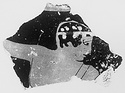
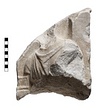
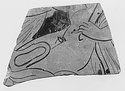
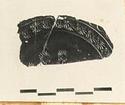
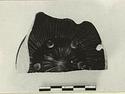
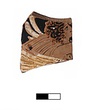
Boy's head right, his right arm outstretched; behind it a large mound-like object (?).
No relief contour.
Glaze inside brown; dull and uneven.
The fragment seems to come from near the shoulder. Trench ... 12 December 1930 ... PNP 52 ... PNP 52 |
Head and base are missing.
A youth stands in an easy attitude, an oinochoe in his right hand his cloak hanging over his extended right forearm. His locks reached to his shoulder.
Clay: Fine, buff, covered ... Early fourth century B.C ... PNT 52 ... PNT 52 |
Sides and bottom chipped. Equal sides; sharp angles.
Stamp on top: Female head to right, hair blowing out behind.
A female head facing right. The features are fine and sharp; the hair blown out behind, ... 1932 ... PNW 52 ... PNW 52 |
Lead tube with very small hole only partially piercing it. One end widened, and the edges turned inward. Assembly place, filling of Period III ... 1930 ... PNM 52 ... PNM 52 |
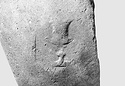
| Stamped with a krater (?).
Inscription: Δ ...
Βuff.
Thasian handle. John Craft, Nb. No. 14. ]αι[ ΔαΪφρων? 228 ... 1939 ... AH 52 ... AH 52 |
Kylix base with black glaze - some red in it. Inscribed on bottom. Oscar Broneer, Nb. No. 4. 178 88-396 ... 31 May 1937 ... AO 52 ... AO 52 |
NM 16168
Flat bottom; shallow, convex lower body.
High slightly concave neck decorated with four goats, couchant and regardant.
Thin brown glaze.
For the goats cf. P. Amandry, Journ. Near East St ... LG II ... H 52 ... H 52 |
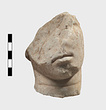
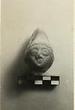
| The left side of the head is preserved, broken all round.
The features are heavy, the cheeks and chin bulging; the mouth is bent down at the corner.
Coarse work. Mold made; hollow. Not colored.
Red clay ... 5 August 1931 ... T 52 ... T 52 |
| Typical. Handle rising.
Fine yellowish clay, with small light red core; pinkish cream slip.
Impression doubled; worn. Stp: doubled* Finished Δαμοκράτε[υς]
rose
(framed in O) 438 Leica ... 17 July 1931 ... SS 52 ... SS 52 |
| Wavy lines on rim.
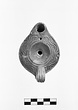
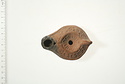
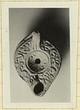
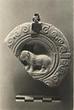
Plain discus, with central filling hole. Handle solid, triple grooved. Nozzle rounded.
On bottom, double concentric grooves, with five stamped circles.
Reddish-brown glaze.
Red clay ... 17 June 1931 ... L 52 ... L 52 |
A small section missing.
Plain thin as a paper, disk.
A single hole for attachment. No decoration. in front of west ledge and ca. 0.30m. below the top Finished Mycenaean chamber tomb; N.W. part of chamber ... 1 June 1939 ... J 52 ... J 52 |
| Apparently a left arm, in tightly wrapped drapery, with another garment, having a fringe resembling locks of hair, worn over the shoulder. On the top of the shoulder rest two long curls.
Pentelic marble ... 1933 ... Η 52 |
| Top part.
All of the lower part of the lamp is missing, save a little near the nozzle.
On rim, debased herringbone, very faint.
On discus, a cross (?), very faint indeed; filling hole between the arms ... 15 March 1933 ... Η' 52 |
| From a small cup or bowl with nearly straight sides and thin walls, the edge slightly grooved on the outside.
Over part of a festoon, painted in thick buff on the black glaze, the letters:
Clay, fine ... 18 February 1932 ... Α 52 |
| Mended from many fragments which form rather more than half of the body; another fragment does not join. Restored in plaster. In concave flange, two string holes on one side, three on another, in the loose ... 16 April 1932 ... ΣΤ' 52 |
| Small handle; curve piece.
Light cinnamon colored highly micaceous clay.
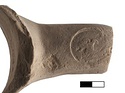
Rectangular stamp; club.
Early Thasian. Finished Mixed fill. [ Ἀριστοκ]
club
Π̣υ̣λάδης
(retr) Leica ... 12 June 1935 ... Ν' 52 |
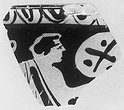
| A single fragment preserves part of the rim, sharply out-turned. Upper part of a draped figure facing right; in field part of a round object decorated with a cross and dots. At the top, ovules.
No relief ... 24 March 1939 ... ΕΕ 52 |
| Head in close fitting helmet. First interpretation: female head.
Broken off at the base of the neck; the surface damaged. below the level 63.30m. Below the level 63.30m., together with late Roman sherds ... 1 February 1934 ... Κ 52 |
| Mended from two pieces.
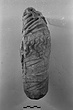
Human eyes, facing full front. The feathers indicated by incision. The comb pierced by a hole.
Brownish clay. Leica ... 24 February 1934 ... Γ 52 |
| Unbroken.
On discus, rosette; on rim, large and small stamped circles. Thin handle, unpierced; single groove above; fish-tail grooves and a circle on wall below. Reverse, small concave; six impressed circles, ... 20 March 1939 ... ΓΓ 52 |
| Ivy pattern on rim; circles on depressed discus; solid handle, grooved.
On the under side, leaf, and circles.
Unglazed.
Red clay.
Type XXVIII of Corinth collection. Trench 1, under clay floor of House ... 3 May 1934 ... ΑΡ 52 |
| Fragment of discus and rim.
Scrolls on the rim with dots and herringbone panels. A ram left on the discus.
Unglazed.
Light red clay.
Type XXVIII of Corinth collection. Modern. Leica ... 10 February 1937 ... ΛΛ 52 |
| Obverse : Head of Hermes, right, with caduceus.
Counterstruck at right, dolphin.
Reverse : Plain.
Cf. IL 235 for type. Cistern B at mouth. in zip lock bag in conservation
with gloves Leica ... 25 May 1935 ... ΠΘ 52 |
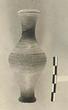
| Fusiform shape.
Neck broken. On neck, milky stripe bordered by red. On shoulder, three-stripe spiral of red above milky stripe bordered below by red.
Gray clay.
Cf. Agora XXXIII, no. 414.
Cf. Hesperia ... 18 March 1936 ... ΟΧ 52 |
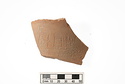
| From an amphora, where shoulder melts into neck.
Either written upside down or retrograde? Incised:
Pink clay with small white bits. Unglazed. Finished Water channel (4th c.). Leica ... 5 February 1937 ... Υ 52 |
| Mended from two pieces. A fragment from a cylindrical vessel, with a trace of a handle on the inside, toward the left. Around the top, inside and out, a band of reddish glaze.
On the neck beneath this ... 15 March 1934 ... ΟΕ 52 |
| Broken but complete. Small lid, slightly convex on top; lip plain, curves downward. Small groove above edge of lip on exterior. Large moulded knob on rather high stem.
Dull black glaze over all. Finished ... 2-3 May 1940 ... ΞΞ 52 |
Wall fragment. Max. dim. 0.066.
Lower parts of two draped figures, the left perhaps wearing boots.
The drapery is decorated with dot clusters. Below, egg pattern ... Late 5th century B.C ... Agora XXX, no. 52 |
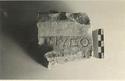
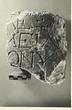
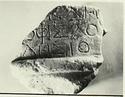
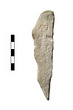
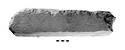
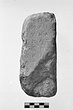
| Inscribed fragment.
Top and bottom preserved (recut?); above letters a raised band, with bevel.
Five letters remain.
Pentelic marble. Found in the wall of the modern house 638/12, over the central part ... 11 December 1935 ... Τ 52 |
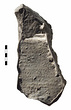
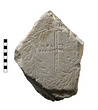
| Inscribed fragment.
Inscribed face only preserved.
Surface badly eroded.
Traces of three lines of the inscription preserved.
Pentelic marble. Found in the wall of the modern house 650β/4 (650b/4), over ... 17 January 1937 ... ΘΘ 52 |
| Inscribed fragment of grave monument.
Inscription along an inner disc.
Two lines of the inscription preserved.
Pentelic marble. Found in a wall of the modern house 640/1 outside the Market Square, south ... 27 November 1937 ... Ψ 52 |
| Inscribed fragment.
The inscribed face and a bit of the rough picked back preserved. Above the inscription the spring of a moulding.
Fifteen lines of the inscription preserved and a little more, very much ... 4th. century B.C ... ΑΑ 52 |
| Inscribed fragment of columnar grave monument.
Part of top preserved.
Four lines of the inscription preserved.
Hymettian marble. Found in modern context, in the area between the Acropolis and Areopagus ... 8 May 1939 ... ΖΖ 52 |
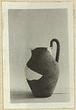
Part of upper body and top of one handle restored.
Lightly grooved, reserved resting surface; concave underside with nipple. Junction of moldings of foot reserved. Low, tapering stem. Top of handles horizontal ... Ca. 325 ... Agora XXIX, no. 52 |
| Broken all around and at back. Fragment of unfluted column drum with characteristic chisel marks of Temple of Athena at Sounion.
Streaky gray and white Agrilezza marble. House 653/3. 31 Leica ... 26 April 1971 ... ΡΡ 52 |
| Fragment of columnar grave monument.
Broken away in back and all around.
Hymettian marble. Found in the wall of the modern house 637β/5 (637b/5), west of the Odeion. Leica ... 6 February 1935 ... Ν 52 |
| Fragment of columnar grave monument.
Part of top, and of inscribed face only preserved.
The inscription above the raised band.
Pentelic marble. Found in the wall of the modern house 636α/3 [636/3 on Vrysaki ... 2 January 1935 ... Π 52 |
Fragment of wall and handle.
Vertical ribbing. Horizontal wishbone handle with side projections. Glazed outside, more thinly inside ... 4th c. B.C ... Agora XII, no. 52 |
| Inscribed fragment.
Inscribed face, probably part of rough picked back preserved.
Honorary citation only.
Two lines of the inscription preserved, inscribed within an incised wreath; at left above wreath, ... 4th.-3rd. centuries B.C ... ΟΑ 52 |
| Inscribed fragment.
Inscribed face only preserved.
From the top of a monument (?) with a moulding above the letters.
Six letters remain.
Hymettian marble. Found in modern context outside the Market Square, ... 13 February 1936 ... ΗΗ 52 |
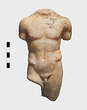
| Head, arms and legs missing.
Nude standing male figure.
White marble with blue veins. Finished Modern cesspool. Leica ... 23 April 1947 ... ΟΟ 52 |
| Inscribed fragments.
Fragment ΕΛ 52 a), only part of the inscribed face preserved. Surface badly worn at right, as if it had been walked on.
Fragment ΕΛ 134 b), inscribed face only preserved.
Hymettian ... a) (ΕΛ 52) 29 April 1959
b) (ΕΛ 134) 6 June 1959 ... ΕΛ 52 |
| Fragments of an inscribed stele; Bilingual.
Fragment Ο 11 a), broken to right, behind, and below. Moulding above; acroterion at corner.
Latin inscription above; Greek translation below.
Fragment Ο 52 ... 15 October 1934 ... Ο 52 |
| Fragment of drapery from lower part of figurine.
Broken all around.
Nearly flat, solid fragment. Back unmodelled with the letters Δ Η incised.
Buff clay.
For context see Hesp. 52 (1983), p. 260. Cave, ... 15 March 1932 ... Hesperia 52 (1983), p. 286, pl. 52, no. 22. |
| Thin walled, flaring rim. Black glazed inside and out, the glaze worn away over two-thirds of the outside. On the preserved part, painted in opaque cream relief, one loop of a festoon and over it:
Fine ... 13 February 1932 ... Hesperia 52 (1983), pp. 264, 286, pl. 52, no. 24. |
| Broken on three sides. Lid with scene depicting woman running right, holding basket in right hand. At left, the right arm of another figure, reaching down towards a rectangular object. Edge of lid reserved ... 1932 ... Hesperia 52 (1983), pp. 272, 286, no. 23, pl. 52. |
| Inscribed fragments.
Both pieces, broken all around and behind.
Pentelic marble. a) (Η' 444) 30/ΞΗ
a) (Η' 444) H 6
b) (*) G-K 5-8
Levels:
a) (Η' 444) 54.00m. a) (Η' 444), found in late Roman context, over ... a) (Η' 444) 13 June 1933
b) 19 January 1934 ... Hesperia Suppl. 38 (2008), no. 52, fig. 52, p. 51. |
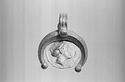
| A curving band of gold, shaped like the letter C.
Triangular in section and tapering toward a small round knob at each tip, is suspended from its center by a triple grooved loop, flat in section, the pointed ... 9 March 1932 ... Hesperia 52 (1983), p. 285, pl. 52, no. 19. |
| From side of closed pot, a pelike(?).
Parts of two draped standing figures, one wearing an ornamented cloak and high boots. Border of egg pattern below.
No relief contour. Dull glaze. Well to North of ... 9 April 1954 ... Agora XXX, no. 52. |
| Part of flat bottom and flaring wall preserved.
Gritty red clay, red at core; red burnish inside and out. Well 10, Neolithic. Leica, 83-491 PD 1200-16 ... 7-10 March 1939 ... Agora XIII, no. 52. |
| Fragments of an inscribed architrave.
Top and bottom, picked fine, preserved.
In the top a narrow rectangular cutting, which looks rather like a clamp cutting than one to receive any part of a statue ... End of 5th. century B.C ... a) (Π 52, ΣΑ 60) P 8
b) (ΣΑ 99) P 9 ... a) (Π 52, ΣΑ 60), found in wall of the modern house 637α/5 (637a/5), west of the north end of the Stoa of Attalos.
b) (ΣΑ 99), found in late context west of the Stoa of Attalos, opposite Shop XV. |
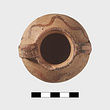
| Complete but for small chip at rim. Small puncture on belly and numerous small lime inclusions; paint very worn in places.
Globular shape, rim slightly flaring, two vertical strap handles from belly to ... Mycenaean LHIIIA1 ... Mountjoy, Guide to Identification (1986), p. 52, no. 11 (FM 53).
|
| Mended from five fragments, nearly half of rim preserved, partially burned on the underside. Small non-joining fragment.
Straight wall retouched by sharp tool.
Micaceous light orange fabric with ocher ... 10 July 2009 ... handler:2009:f:52 |
| Complete. Worn string hole.
Rounded shape, roughly cut. Pierced through, off-center. Flattened ends.
Polished orange carnelian.
For sequence amongst other beads, see nb. BZ LIV, p. 10610, no. 31. Similar ... Mycenaean LH IIIA ... martens:2014:f:52 |
| From a large open bowl, black glaze inside, none outside.
Incised inside: Red fill over limestone wall east of drain. Leica, 84-8-38, II-52, XXXIX-52, HAT 49-65 ... 10 June 1935 ... Leica, 84-8-38, II-52, XXXIX-52, HAT 49-65 |
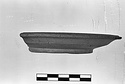
| Full profile preserved, about two-thirds restored in plaster. Shallow bowl; low base ring; thickened lip slightly undercut on inside.
Light gray clay. Unglazed. Cistern. Leica PD 901-154, PD 2262-110c, ... February-April 1937 ... Agora V, no. F 52, p. 16 ... Agora XXXIII, no. 316, fig. 52. |
| Part of upper wall remains. A cylindrical container with heavy walls, flat on top. A low collar around top of wall outside.
Fine buff clay, brown glaze around top inside and out. Bouleuterion plateia, ... 8 May 1935 ... Agora X, no. DM 52. |
| Small head, from the Altar of Ares series (?), broken at base of neck and at top, back and right side of head; left cheek, mouth and chin preserved.
Head tilted slightly toward the right.
Pentelic marble ... 29 March 1933 ... Η:52/ΙΑ |
| Inscribed fragment.
Right side preserved.
Eight lines of the inscription preserved; stoichedon.
Pentelic marble. Found in modern cellar wall, on the north slope of the Areopagus. Leica, 97-52-32a, 97-52-33a ... 4th. century B.C ... Leica, 97-52-32a, 97-52-33a |
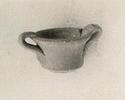
| Fragments of lip and body missing, restored in plaster. Flat bottom; round mouth; high-swung handle.
Light buff clay and slip; much foreign matter in the clay. Well. Leica, 4-314 PD 1091-49 ... 20-21 March 1933 ... Hesperia 3 (1934), no. A 52 ... Agora XXXIII, no. 52, fig. 10, pl. 10. |
| Pyre plate. One-third of rim with full profile preserved. Ring base. Projecting rilled rim.
Orange clay; thin red glaze on floor.
Cf. Agora XII, no. 574. South chamber, lower red layer. 1897 79-2-1 ... 24 February 1932, 31 May 1934 ... Hesperia 52 (1983), pp. 271, 289, no. 52, pl. 55. |
| Foot and lower body. Moulded foot with scraped groove in resting surface. Concave underneath. Scraped groove between mouldings of foot. Fairly high, thin stem.
Dull black glaze. North chamber, upper fill ... 20 July-1 August 1931 ... Hesperia 52 (1983), pp. 264, 265, 273, 285, no. 17, fig. 2, pl. 52. |
| Mended from two pieces; fragments missing top and bottom; preserved edges at bottom, sides and top (?). One quadrant preserved.
Suggests a bell-shaped echinus, capped by a low abacus, with acanthus leaf ... 24 May 1932 ... Leica, XXXIV-46, 97-52-18a, 97-52-19a, 97-52-(20a) |
Ring foot; rilled rim, sloping inwards. Two raised rings on underside. Concave moulding on undersurface. Decoration on floor: small central circle, around this, band of enclosed ovules within palmettes; ... Ca. 430 B.C ... Hesperia, XXXII, 1963, pl. 52, 33, uses a slightly smaller stamp. |
| Broken all around. Fragment preserving one volute and part of resting surface of a large Ionic capital, similar in tooling and scale to other assigned to the Temple of Athena at Sounion.
Light gray marble ... 22 June 1972 ... Barletta (2017), no. 52, fig. 235. |
| Broken on top and right side, leaving most of the face and chin.
She wears a helmet, apparently with upturned cheek-pieces, over curly hair.
Pentelic marble.
Drilled for setting on base December 1960 ... 19 April 1934 ... Hesperia 19 (1950), pl. 52 a. |
| Slightly chipped at bottom.
Pyramidal.
Unglazed. Very pale yellow clay. Well.
6th c. B.C. Leica ... March 1936 ... Agora XXXI, p. 163 (CPD 52). |
| Rectangular.
Roughly made, pierced at one end. Unglazed.
Pinkish buff clay. Well.
6th c. B.C. Leica ... March 1936 ... Agora XXXI, p. 163, CPD 52. |
| Broken all around. Upper part of nude, wreathed youth. The head is bound with a fillet, ornamented with white dots; open profile eye; the head faces left, over the left shoulder; right arm outstretched; ... 4 July 1931 ... Agora XXX, no. 438, pl. 52. |
| Broken all around.
Relief decoration: water bird flying right; feet, tips of tail, wings and beak missing. The bird appears to be carrying something in its beak.
Rather dark red clay, with darker red ... 11 May 1932 ... Agora XXXII, no. 1024, pl. 52. |
| In relief, a horse, galloping right; the head missing.
Red glaze.
Late Roman A. Well, late Roman. Leica ... 27 April 1934 ... Agora XXXII, no. 1027, pl. 52. |
| Wall fragment with vegetable decoration of tall lotus petals(?) combined with acanthus leaves on which birds may perch.
Firm black glaze. Cistern. Leica PD 316 ... 1932 ... Hesperia 3 (1934), no. C 52. |
| Small fragment.
Ribs and dots. Pithos. Leica PD 331 ... 1932 ... Hesperia 3 (1934), no. D 52. |
| Young woman standing on right, overlapping the anta, is preserved from base of neck to waist. Left shoulder and chest sheared away. Contour of head visible in background plane.
Right arm is overlapped ... 12 August 1977 ... Agora XXXV, no. 52, pl. 16. |
| Wall fragment. Apotheosis of Herakles: part of Herakles and Nike in a chariot. On the left is the chariot rail; on the right, the body and thighs of Herakles, his left hand holding the club; his himation, ... April-May 1936 ... Agora XXX, no. 441, pl. 52. |
| Much broken; nearly half of wall and more than half of rim missing. Squat jug; base slightly defined and flat below; low wide vertical neck, narrow out-turned lip; single strap handle, lip to upper wall ... 7 March 1939 ... Agora XXXII, no. 1624, fig. 52. |
| Much of rim and floor missing. Narrow ring foot, gently rounded floor, overhanging rim, down-sloping.
Pinkish-buff clay, black glaze. Middle Stoa, building fill, disturbed with Byz. Leica ... 1 SApril 1933 ... Agora XXIX, no. 750, fig. 52. |
| Small fragment from floor of stemless cup; foot broken off. Black glaze inside and out, with a thin scraped circle on the underside. On the floor, stamped pattern: linked palmettes surrounded by a band ... 23 April 1951 ... Agora XII, no. 511, pl. 52. |
| Fragment from wall of bell-krater, broken all around. Heads and parts of upper bodies of three harnessed prancing horses moving left past four columns. Trace of a figure at left edge of fragment. Coarse ... 13 June 1939 ... Agora XXX, no. 440, pl. 52. |
| About half the foot and floor; the walls and rim broken away. Incised rays and small stamped palmettes on the floor; moulded foot and cushioned bottom.
Good black glaze over all, except for reserved ... 14-15 July 1947 ... Agora XII, no. 512, pl. 52. |
| Fragment from the upper wall of a bell krater; reserved line inside below rim. Preserved is most of the head and shoulders of a youthful male figure, right, with arms outstretched; a cloak falls over his ... 23 July-6 August 1947 ... Agora XXX, no. 443, pl. 52. |
| Mended from five pieces; part of floor and rim missing. Plain foot; plain out-turned rim.
Black glaze over all. Komos cistern. Leica ... May 1947 ... Agora XXIX, no. 746, fig. 52. |
| Mended from four pieces; part of rim and floor missing. Plain ring foot; flat rim slightly dropped.
Glazed over all; much worn; faint stacking circle on floor; space inside foot brown. Komos cistern ... May 1947 ... Agora XXIX, no. 752, fig. 52. |
| About half the flaring foot preserved, with part of the floor. Radiating from the center of the floor, columns of arcs; a ring of stamped tongues outside.
Traces of a graffito in the middle:
Good black ... 28 June-8 July 1947 ... Agora XII, no. 509, pl. 52. |
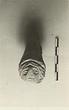
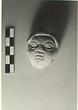
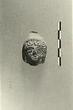
| The head was made in two parts, of which this is the front.
The figure wears a cap of some sort, with a heavy rim, beneath which the hair falls on to the forehead.
Traces of red paint on the face.
Buffy ... 8 June 1933 ... Agora VI, p. 52, no. 320. |
| First interpretation: head of woman in peaked hood.
Broken off at the neck.
The high peaked hood (or handle) is pierced at the top as if for suspension.
Gouged technique.
Red clay.
Late Roman. In brown ... 26 February 1934 ... Agora VI, p. 52, no. 299. |
| Broken behind and at neck.
A full face. The head is covered by a veil which leaves only a fringe of hair exposed Traces of white and red paint on garment. White color for eyes, red for flesh. Late Roman ... 27 February 1935 ... Agora VI, p. 52, no. 321. |
| Preserved is only the head of a figure, wearing a high conical headdress.
Moulded. Traces of red paint over white on the headdress.
Buff micaceous clay.
Late Roman.
ADDENDA: Same mold as T 1145. Red ... 21 March 1935 ... Agora VI, p. 52, no. 306. |
| At the top of the headdress there was a pierced projection forward.
The face and the top of the pointed headdress are painted white; the lower part of the headdress red.
Red clay.
From a plastic lamp, ... 2 May 1935 ... Agora VI, p. 52, no. 330. |
| Preserved is only the front half of the cap and the face of a boy wearing a tall headdress. The features crudely incised. The nose flattened before baking. The cap was pierced near the top, from side to ... 11 April 1934 ... Agora VI, p. 52, no. 296. |
| Broken away behind.
Coarse featured head.
No trace of paint.
Slightly micaceous buff clay. Clearing slopes of Kolonos Agoraios, disturbed. Leica ... 25 April 1934 ... Agora VI, p. 52, no. 329. |
| Broken away in back, above and below.
Squat face with double chin.
Unglazed.
Buff clay. Leica ... 11 May 1934 ... Agora VI, p. 52, no. 325. |
| Broken away behind and below. Headdress broken at the top.
A high headdress.
Gouged technique. Remains of pale slip.
Red clay.
ADDENDA: Same mold as T 1120. Disturbed late Roman. Leica ... 29 March 1934 ... Agora VI, p. 52, no. 302. |
| Broken away in back and below; the surface much worn.
Abundant traces of white paint.
Coarse red clay. Room with fresco. 627 Leica ... 3 April 1934 ... Agora VI, p. 52, no. 332. |
| Fragment from upper part, right side of draped figurine with fat folded arm.
To left, remains of a crude joint.
Distributed down left side in a manner unsuggestive of buttons, five pellets.
Slight traces ... 1 April 1932 ... Agora VI, no. 52, p. 45. |
| Fragment of front part of head in peaked (?) cap.
Upper side and lower edges broken away.
Mould-made. Gouge technique. No traces of paint.
Rather coarse red clay, yellow at surface. 08/ΛΘ* Leica ... 13 April 1932 ... Agora VI, p. 52, no. 295. |
| First interpretation: head of female figurine.
Front part of head from a bust of boy figurine.
Top of head broken away.
Large eyes, rising to inner corners; projecting nose, small mouth, round dimpled ... 18 Februry 1932 ... Agora VI, p. 52, no. 314. |
| Right side of head, in high pointed cap.
Broken at chin and top of cap.
Hair in double scallops round face.
Linear technique, but not pronounced. Traces of yellow paint.
Light red clay. From sherds 16a ... 28 April 1932 ... Agora VI, p. 52, no. 293. |
| Broken behind and at neck.
Almost no modelling. Remains of red on hair, white on flesh and black for eyebrows and outlines of eyes. Stony fill. Leica ... 13 May 1940 ... Agora VI, no. 333, p. 52. |
|
|